Why Do Polish Families Bring Flowers to Graves?
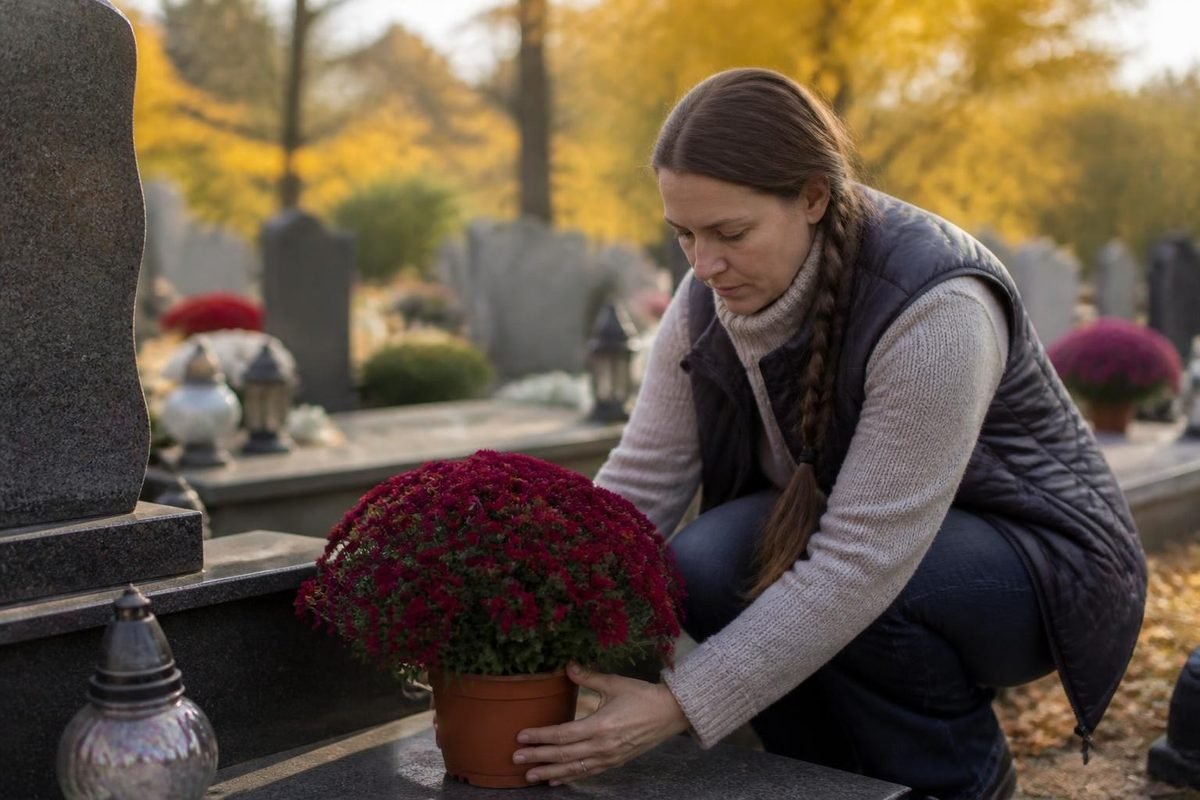
Polish families bring flowers to graves as a sign of remembrance, love, and respect for people who have died. The flowers are part of a wider custom of tending graves, lighting candles, and visiting cemeteries with family.
Flowers as a sign of care
A grave is a place where relatives can show that someone has not been forgotten. Placing flowers there is a visible act of care, much like cleaning the stone or removing old leaves. Some families visit often, while others come on anniversaries or major religious days.
The flowers do not have one fixed meaning for everyone. A person might choose a flower the deceased loved, use what is available in the season, or bring an arrangement that will last outdoors. The gesture matters more than following a precise rule.
Visits around All Saints' Day
In Poland, cemetery visits are especially common around All Saints' Day on November 1. Families gather at graves, leave flowers, and light candles in glass or plastic holders. Cemeteries can be busy throughout the day, and many people travel to visit relatives' graves.
All Souls' Day follows on November 2 and is devoted in the Catholic calendar to praying for the dead. Poland has a strong Catholic tradition, so prayer is important to many families. Others take part mainly as a family or cultural custom. Not every family observes the days in the same way.
Why chrysanthemums are common
Chrysanthemums are a familiar sight at Polish graves in autumn. They flower late in the season and are widely associated with cemetery visits around All Saints' Day. Potted chrysanthemums can be placed beside a grave, while cut stems may be used in arrangements.
Other flowers are also used. Roses, carnations, and mixed bouquets can appear at graves throughout the year. The choice may depend on the weather, the occasion, and the preferences of the person bringing them.
Looking after a family grave
Flowers are often one part of a longer visit. Before placing them, relatives may wash the gravestone, clear away wilted plants, and tidy the area around it. They may also replace candles or arrange flowers left by other visitors.
These tasks can bring several generations together. A visit gives relatives time to speak about the person buried there, share memories, or stand quietly. Some people go alone, and a short visit can be just as meaningful as a family gathering.
Common questions
Do flowers have to be fresh?
No. People may bring fresh flowers, potted plants, or artificial arrangements. Each family makes its own choice.
Are flowers brought only in November?
No. People also visit graves on birthdays, anniversaries, religious holidays, and other days that matter to them.
Must visitors bring chrysanthemums?
No. Chrysanthemums are common in autumn, but there is no general requirement to choose them. A simple bouquet or another flower can be appropriate.
Take a look at more details